
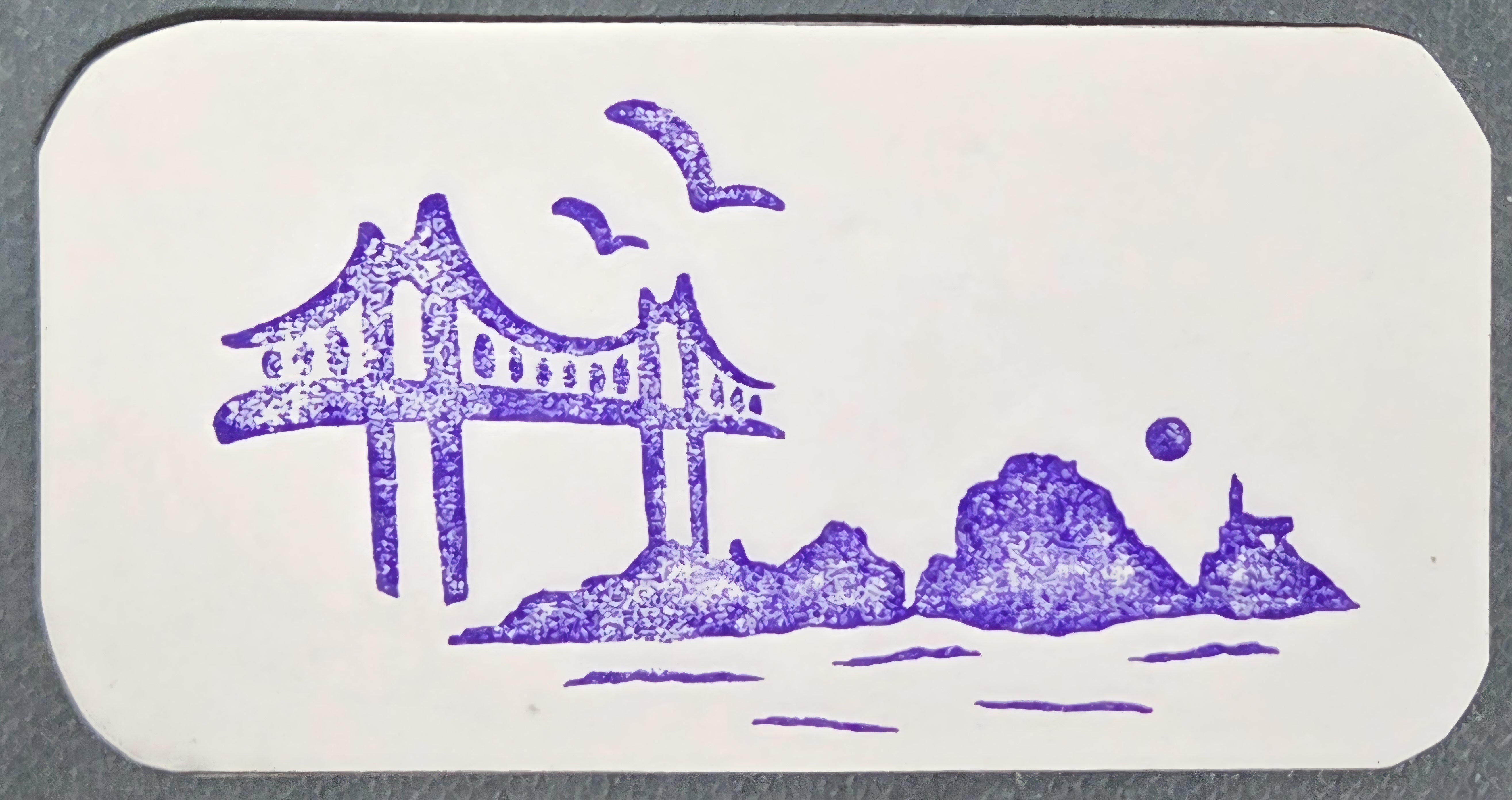

부산은 오래 전부터 왜구의 침탈을 받아왔고 임진왜란 최초의 격전지, 일제강점기의 수탈의 최초, 최후의 보루로서 과거의 전통적 문화를 원형대로 계승 할 수 없었다. 그러나 끊임없는 침탈과 문화접변 과정 속에서 나타난 혼종 문화는 부산인의 기질에 깔려 있다. 보통의 서민들이나 일반인들이 전쟁이나 문화충격 등으로 자기 스스로 감당할 수 있는 범위를 넘어설 때는 '기가 찬다' 라는 표현을 쓴다. 말 그대로 자기가 감당할 수 있는 방어기제를 넘어선다는 것이다. 이런 경험을 할 때는 통상 말문을 닫거나 말수를 줄이게 된다. 거친 바다에서 험한 일을 할 때에는 그렇게 강인했던 사람들이 일상생활에서 말이 없는 모습을 멜빌(H. Melville) 은 <백경(Moby Dick)> 에서 이렇게 표현했다. " 정말로 놀랍게도 거의 모든 사나이가 깊은 침묵에 잠겨 있었던 것이다. 아니 그 뿐 아니라 부끄러워 하기까지 했다."
그런 맥락에서 부산인들의 지속적인 낯선 경험과 충격은 말보다는 눈빛의 소통을 강화하였을 것이다. 또한 거친 바다와 싸우고 해양의 예측불가능한 난폭함을 극복하개 위해서는 조곤조곤함의 소통보다는 강인함과 일괄적 소통의 틀이 필요했을 것이다. 이런 환경적, 역사적 여건이 부산인들로 하여금 고맥락의 무뚝뚝함을 형성시켰을 것으로 보인다. 또한 낯섬과 새로움이 일상적으로 경험되면서 항상 이질적인 것과 섞이는 것이 일상화된 문화는 섣불리 어떤 발화행위를 주저케 만들게 된다. 홀(E.Hall) 의하면 '고맥락의 문화 환경에서는 자기 마음속에 있는 이야기를 할 때 상대방이 자신이 하려는 말을 이미 알고 있다고 믿기 때문에 구체적으로 이야기할 필요가 없다고 생각한다.'
그의 표현대로 고맥락 문화의 다원적인 언어습관은 인간에 대한 높은 신뢰와 믿음을 바탕으로 한다. 인구규모가 적고 부산포 바닷가에 옹기종기 모여 살면서 공통의 피해의식과 이윤추구의 공감대가 있었던 시절에는 이러한 믿음을 바탕으로 한 고맥락의 말수가 적은 무뚝뚝함은 통용될 수 있었을 것이다.
그러나 대규모 인구집중으로 메트로폴리탄 도시로 발전하면서 필연적으로 경제적 양극화가 심화되면서 서로를 믿는 신뢰의 끈은 약해질 수 밖에 없다. 지금 부산시민의 80%이상이 각 분야에서 격차를 일상적으로 느끼고 살고 있다. 이러한 일상적인 격차를 느끼고 산다는 것은 자연스럽게 신뢰의 상실과 사회자본의 약화로 이어질 수 밖에 없다. 그러나 부산사람들은 타인과 이웃에 대한 신뢰와 정(情)적인 요소가 여전히 생활미덕으로 존중되고 있다.
우스개 소리겠지만 기업의 영업맨들 중에 인간관계와 정(情)적인 포인트를 집어내는 데에는 부산의 영업맨들을 전국에서 따라갈 수 없다고들 한다. 그만큼 말수는 적고 표현은 서툴지만 그 무뚝뚝함의 이면에 정감을 바탕으로 한 인간적인 교류를 중시하는 문화적 기질이 깔려있는 것으로 볼 수 있다. 이러한 사회적 경험이 언어를 형성하지만, 언어가 우리의 경험을 규정하기도 한다. 따라서 부산사람들의 무뚝뚝한 언어, 태도, 문화적 습관들은 바닷가라는 자연환경 속에서 형성된 일상적 경험이 그러한 반응들을 만들었을 것이다. 나아가 복잡하고 다원적이며 비선택적인 역사적 경험이 이를 강화하였을 것이다.
이러한 고맥락형 무뚝뚝함은 표현된 것 보다는 표현되지 않은 것에 대한 중시문화를 발달시켜 왔다. 부산사람들은 그러한 표현되지 않았음에도 시간이 지나서 그 표현되지 않았음을 상호 공유하고 일치하는 것을 확인할 때 인간적인 살맛을 느끼곤 한다.
한편 역사적 낯선경험의 일상화와 그 결과로 강화된 혼종성은 일상적 낯섬과 섞임에 쭈뼛거리는 생활상 방어기제로 일상화되었다. 그렇다보니 전승보다는 새로움에 대한 집착과 변화감수성이 높다는 특징을 보인다. 그 결과 전통에 대한 존중이 상대적으로 약하고, 새로운 가치체계가 확고하게 정립하기 어려울 때에는 항상 불안정한 아노미 상태가 지속될 수밖에 없다. 그처럼 불안정한 환경 속에서는 단호하고 명확한 상황규정을 유보하고 보류하게 된다. 그렇다보니 모든 판단과 감정을 담아 놓았다가 한꺼번에 쏟아붓는 ' 불뚝 ' 성질로 나타난다. 또한 무뚝뚝한 기질적 성향은 항상 용기있게 상황을 뒤집기는 하되 마무리하는 성의나 사회관계의 세심한 소통기술의 부족에 당황하게 된다. 부산사람들은 마무리를 이렇게 할려고 한게 아닌데, 정말 어떻게 말이나 일을 잘 마무리 할까를 몰라서 오해를 받는 경우가 많다.
이처럼 무뚝뚝함은 단순히 말수가 없음으로 끝나는 것이 아니라, 정확한 의사소통기술의 부재로 이어지는 경우로 나타난다. 나아가 결과도 중요하지만 과정이 중시되는 최근 의사소통의 흐름에는 종종 오해를 불러일으키고, 일견 단점으로 비춰지기도 한다.
하지만 전통적으로 겉은 거칠지만 속은 깊은 가치를 지향하는 기질은 표피적이고 경박한 소통문화가 횡행하는 이 시대에 깊은 성찰과 혜안을 위한 문화적 토양이라는 측면도 동시에 조명되어야 한다. 이러한 고맥락형의 무뚝뚝함이 내면의 가치를 존중하는 성찰의 언어와 생활문화로 승화될 수 있다면, 이는 미래의 소중한 생활가치로 자리잡을 수 있을 것이다.
Busan has long suffered invasions by Japanese pirates, became the first battlefield of the Imjin War, and later served as both the starting point and the final stronghold of exploitation during the Japanese colonial period. As a result, it was unable to preserve its traditional culture in its original form. Yet the hybrid culture that emerged through continuous invasions and cultural encounters has become deeply embedded in the temperament of Busan people.
When ordinary people experience war or cultural shock that exceeds their capacity to cope, they often say, “I’m stunned beyond words” (giga chanda). Literally, it means that one’s psychological defense mechanisms have been overwhelmed. In such moments, people tend to fall silent or speak less. Herman Melville, in Moby-Dick, described how men who were once strong and resilient while battling the rough sea would grow quiet in daily life:
“Strangely enough, almost every man maintained a profound silence; nor was this all—they even showed signs of shame.”
In this context, the continuous exposure of Busan people to unfamiliar experiences and shocks likely strengthened communication through eye contact rather than words. To fight the rough sea and overcome the unpredictable violence of the ocean, firm and unified modes of communication were more necessary than gentle, elaborate conversation. Such environmental and historical conditions appear to have shaped a high-context bluntness in Busan culture.
Moreover, as unfamiliarity and novelty became routine experiences and mixing with the “other” became normalized, people naturally grew cautious about speaking hastily. According to Edward T. Hall, in high-context cultures, individuals believe that the listener already understands what they intend to say; therefore, they feel no need to articulate everything explicitly. As Hall suggests, the pluralistic linguistic habits of high-context cultures are grounded in deep trust and confidence in others. In earlier times, when the population was small and people clustered along the shores of Busan Port, sharing common experiences of hardship and a collective pursuit of livelihood, this tacit trust allowed a reserved, blunt style of communication to function effectively.
However, as Busan developed into a metropolitan city with large-scale population concentration, economic polarization inevitably deepened, weakening the bonds of mutual trust. Today, more than 80 percent of Busan’s citizens reportedly experience disparities in various aspects of life. Living with such everyday gaps naturally leads to a loss of trust and the erosion of social capital.
Yet despite this, trust in neighbors and the value of jeong—a uniquely Korean sense of deep emotional bond and affection—remain respected virtues in Busan society. It is often joked that among corporate salespeople across the country, those from Busan are unmatched in their ability to identify relational and emotional connection points. Although they may speak little and express themselves awkwardly, beneath their blunt exterior lies a cultural disposition that values heartfelt human exchange grounded in affection.
Social experiences shape language, but language also shapes our experiences. Thus, the blunt speech, attitudes, and cultural habits of Busan people can be seen as responses formed through everyday life by the sea. Furthermore, the city’s complex, pluralistic, and often involuntary historical experiences have reinforced these tendencies.
This high-context bluntness has fostered a culture that values what is left unsaid more than what is expressed. Busan people often feel a deep sense of human warmth when, over time, they come to realize that what remained unspoken has nonetheless been mutually understood and shared.
At the same time, the normalization of historical unfamiliarity and the resulting hybridity have turned cautiousness toward everyday difference into a habitual defense mechanism. Consequently, there is a stronger sensitivity to change and novelty than to preservation. Respect for tradition tends to be relatively weaker, and when new value systems fail to firmly establish themselves, a persistent state of instability—anomie—can arise.
In such unstable conditions, people often suspend or postpone clear and decisive definitions of situations. Emotions and judgments accumulate internally, only to be released all at once in what might be called a sudden outburst. Likewise, the blunt temperament may boldly overturn a situation but struggle with careful closure or refined communicative skills in social relationships. Many Busan people are misunderstood not because they intend to end things abruptly, but because they genuinely do not know how to articulate a proper conclusion.
Thus, bluntness does not merely mean speaking little; it can extend to a lack of precise communication skills. In contemporary communication trends that emphasize process as much as results, this tendency can lead to misunderstandings and may appear as a disadvantage.
Yet traditionally, the disposition that values inner depth despite a rough exterior deserves renewed attention. In an era saturated with superficial and frivolous modes of communication, this temperament may serve as fertile cultural ground for deep reflection and insight. If this high-context bluntness can be sublimated into a language and lifestyle that honors inner values, it may well become a precious way of living for the future.

'부산 Busan' 카테고리의 다른 글
| 매축으로 재탄생한 부산, 그리고 산복도로 Busan Reborn Through Land Reclamation and the Sanbokdoro Hillside Roads (1) | 2026.05.11 |
|---|---|
| 부산의 밀면 Busan’s Milmyeon (2) | 2026.04.23 |
| 부산사람의 기질( 2 )The Temperment of Busan People (1) | 2026.03.04 |
| 부산사람의 기질( 1 )The Temperment of Busan People (0) | 2026.03.03 |
| 부산의 면적과 지형( 2 )The Area and Topography of Busan (0) | 2026.02.26 |