
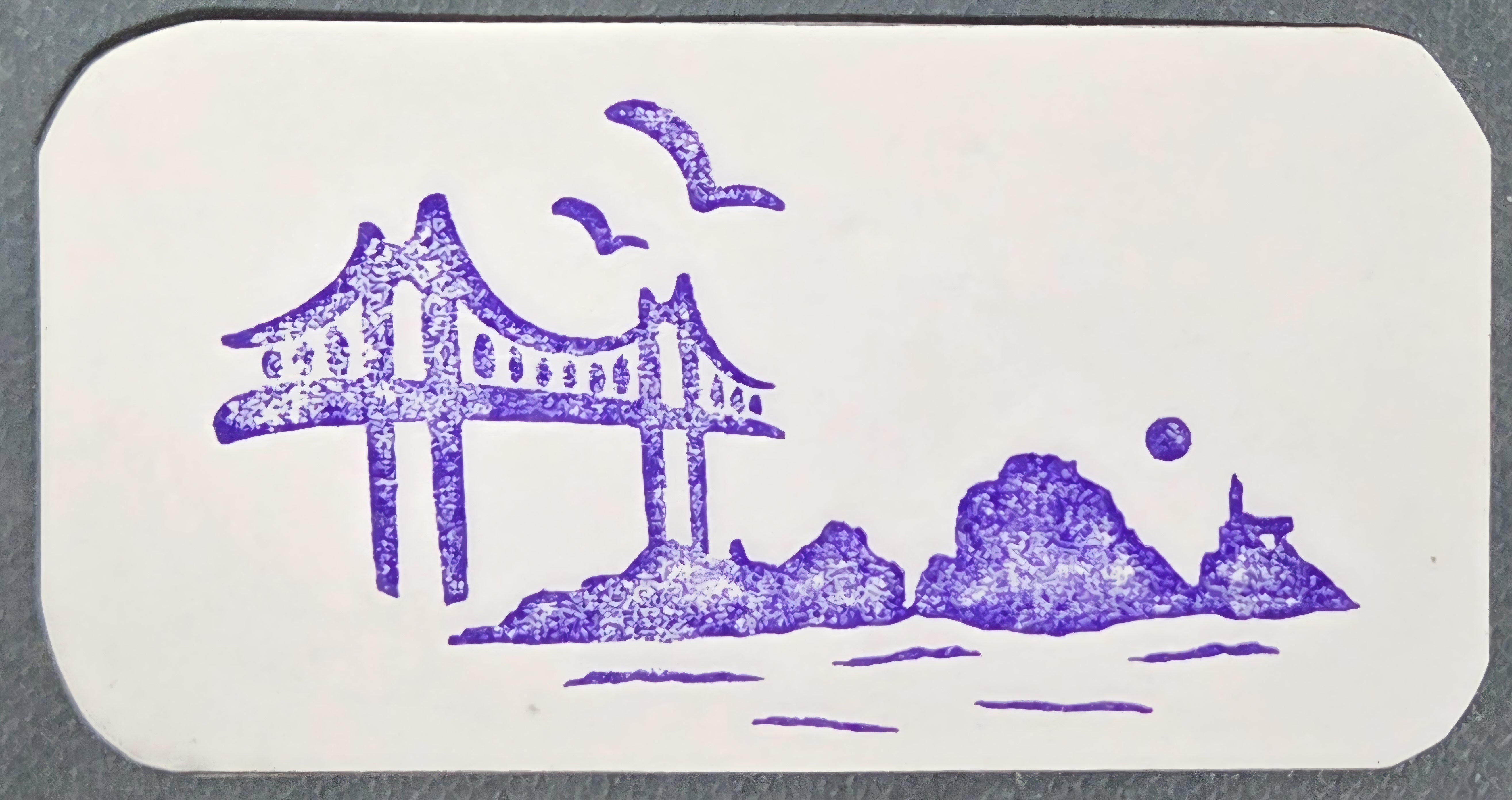

광복 무렵 부산의 인구는 35만명 이었다. 해방이 되면서 귀환동포가 20만명 , 한국 전쟁으로 50만명이 넘는 피난민들이 몰려들어 부산은 포화 상태가 되었다. 전국의 피난민들은 모두 다 "부산 영도다리에서 만자자." 면서 뿔불이 헤어졌고 영도다리는 만남의 장소가 되었다. 운좋게 고향 사람이라도 만나면 서로 부둥켜안고 부른 노래가 실향민들의 애창곡<꿈에 본 내 고향> 이었다. 이 노래는 1951년 가수 한정무가 취입한 노래로 당시 도미도레코드 사는 가마니와 미군담요를 둘러친 임시 녹음실 이었다.
전재의 고통을 뼈저리게 경험한 소설가 박완서는 "1950년대 우리 국민의 정서는 가족과 고향에 대한 그리움이 전부였다."고 회고한 바 있다.
1983년 눈물바다를 이루었던 KBS의 <남북이산가족을 찾습니다> 캠페인의 원조는 바로 영도다리 였다. 가족을 찾는 애달픈 사연들이 방송국 빌딩을 도배했었듯, 1950년대 당시에는 영도 다리 난간과 교각을 메웠었다. 다리아래와 주변에는 판잣집이 벌떼처럼 붙어 있어서 교하촌(橋下村) 이라는 이름이 생기기도 했다. 피난민들은 힘든 객지 생활에서 가족상봉이라는 희망으로 여기에 몰려 들었다. 다리 아래에는 유난히 점집이 많았다. 초조해진 마음에 지푸라기라도 잡고 싶었기 때문 이었을 것이다. 영도다리 아래 점집이 120곳이 되었다한다. 마지막 까지 명맥을 이어간 집은 '소문난 대구점집' 이었다 한다. 지금은 영도 다리아래 유라리 광장에 '점바치 골목 기념관' 이 있다.
객지에서 무척이나 힘들고 지친 피난민들은 다리 위에서 뛰어내리기도 했다. 많을 때는 하루 27명이 투신하여 `자살다리` 라는 오명을 얻었다. 자살 방지를 위해 궁여지책으로 "잠깐만" 을 곳곳에 붙였다. 외로움과 생활고로 시작한 자살이 강력한 단속으로 잠잠해 지다가 휴전이 되자 다시 늘기 시작했다. 3년의 시간동안 정이 들었던 젊은이들이 휴전이 되면서 서로 헤어지게 되었기 때문이다. 당시에는 영도다리 뿐만 아니라 태종대에서도 청춘남녀의 동반 자살이 일어나곤 했다 한다.
서울 환도를 며칠 앞두고 작곡사 박시춘과 작사가 유호가 자갈치 시장에서 술잔을 나누면서 만든 노래거 <이별의 부산정거장> 이다. 해질 무렵 출발해서 다음날 아침 서울에 도착하는 12번 열차에 피난민 애인을 떠나보내는 부산 아가씨의 슬픈 마음을 노래한 곡이다. 가수 남인수씨가 불러서 10만장이나 팔린 앨범이다. 당시 경부선을 테마로 한 노래는 30여곡에 이른다.
지금 영도다리 아래에 세워진 피난민 모습의 가족 동상에는 " 영도다리 거~서 꼭 만나재이~" 라는 부산 사투리가 새겨져 있다. 우리나라는 OECD국가 중 자살률 1위 이다. 자살을 가장 많이 한다는 마포대교에는 " 여보게 친구야, 한 번만 더 생각해보게나." 라고 새겨진 자살예방 조형물이 있다.
영도경찰서 소속의 영도다리 초소는 수영을 잘하는 경찰관들이 비상대기하면서 근무하는 자살방지 특공대였다. 1960년대 초까지 10년간 영도경찰서에 근무했던 박을용 경사는 수영의 달인 이었다. 그는 300번 이상 바다에 뛰어 들었고 그가 구출한 사람이 248명이라는 신문 기사가 있었다.
언젠가 초원복집에서 "이번에 YS가 대통령이 안 되면 우리 모두 영도다리에 빠져죽자." 는 밀담이 정치적 파장을 일으킨 적이 있었다. 부산 사람들에게 " 영도다리에 가서 죽어라." 는 말이 너무나 귀에 익숙한 소리다. 다리가 처음 개통되었을 때는 나루를 건넌다고 해서 도진교(渡津橋)라 부르다가 지금은 영도대교라고 한다. 영도 출신 가수 현인의 노래 <굳세어라 금순아>에 는 `영도다리` 라고 나온다. 영도대교라는 말보다는 영도다리가 더 친숙하게 들린다.
At the time of Korea’s liberation from Japan in 1945, the population of Busan was about 350,000. When the war ended, around 200,000 repatriates returned to Korea, and during the Korean War, more than 500,000 refugees poured into the city, pushing Busan to its limits. Refugees from all over the country said to one another, “Let’s meet at Yeongdo Bridge in Busan,” before scattering in all directions. Yeongdo Bridge thus became a symbolic place of reunion. When they were fortunate enough to meet someone from their hometown, they would embrace each other and sing “My Hometown in My Dreams,” a beloved song among displaced people. The song was recorded in 1951 by singer Han Jeong-mu, at an improvised studio made of straw mats and U.S. military blankets by the Domido Record Company.
The novelist Park Wan-suh, who deeply experienced the pain of war, later recalled, “In the 1950s, the dominant emotions of our people were longing for family and hometown.”
The famous KBS campaign “Finding Dispersed Families” in 1983—which turned the nation into a sea of tears—had its origins at Yeongdo Bridge. Just as the walls of the KBS building were once covered with desperate messages from people searching for family, in the 1950s, the railings and piers of Yeongdo Bridge were filled with handwritten notes. Beneath and around the bridge, makeshift shacks crowded together like swarming bees, forming a slum known as Gyohachon (“village under the bridge”). Refugees, exhausted by their harsh lives in a strange city, gathered there with the faint hope of reuniting with loved ones.
There were an unusually large number of fortune-telling houses under the bridge—up to 120 at one point—because people, in their anxiety, clung to any hope they could find. The last remaining one was said to be “The Famous Daegu Fortune-telling House.” Today, in Yurari Plaza beneath Yeongdo Bridge, there stands the Fortune-tellers’ Alley Memorial Hall.
The suffering and fatigue of life in exile led some refugees to jump off the bridge, earning it the tragic nickname “Suicide Bridge.” On some days, as many as 27 people took their own lives. As a desperate measure to prevent suicides, signs saying “Just wait a moment” were posted all around the bridge. Although suicide numbers briefly dropped due to strict police monitoring, they rose again after the armistice, as young couples who had fallen in love during three years of war were forced to part. Suicides among young men and women also occurred at Taejongdae around that time.
Just before Seoul was recaptured, composer Park Si-chun and lyricist Yu Ho shared drinks at Jagalchi Market and created the song “Farewell at Busan Station.” The song tells the sorrowful story of a Busan girl sending off her refugee lover on the No. 12 train that departed at sunset and arrived in Seoul the next morning. Sung by Nam In-su, the record sold over 100,000 copies. In fact, more than 30 songs were written at the time featuring the Gyeongbu Line.
Today, a bronze statue of a refugee family stands beneath Yeongdo Bridge, engraved with the words in Busan dialect: “Let’s meet right here at Yeongdo Bridge, aye?”
South Korea currently has the highest suicide rate among OECD countries. On Seoul’s Mapo Bridge—another place notorious for suicides—stands a sculpture inscribed with the words: “Hey, my friend, think once more.”
Yeongdo Bridge once had a special police outpost, staffed by officers who were skilled swimmers and trained as a “Suicide Prevention Task Force.” Sergeant Park Eul-yong, who served at the Yeongdo Police Station for ten years in the early 1960s, was a renowned swimmer. According to a newspaper report, he jumped into the sea more than 300 times and rescued 248 people.
Years later, at a famous restaurant called Chowon Bokjip, a remark—“If YS (Kim Young-sam) doesn’t become president this time, we should all throw ourselves into Yeongdo Bridge”—once sparked a major political controversy. Among Busan locals, the phrase “Go jump off Yeongdo Bridge!” has long been a familiar expression.
When the bridge was first completed, it was called Dojin-gyo (渡津橋), meaning “the bridge across the ferry crossing,” but today it is officially known as Yeongdo-daegyo. In singer Hyun In’s famous song “Be Strong, Geum-sun,” the lyrics affectionately refer to it as Yeongdo-dari. Indeed, Yeongdo Bridge (Yeongdo-dari) remains far more familiar and beloved than its formal name.

'부산 Busan' 카테고리의 다른 글
| 부산의 향토 음식 "Local Cuisine of Busan" (0) | 2025.11.15 |
|---|---|
| 해방 후의 부산경제와 적산 기업들“Post-Liberation Busan Economy and Former Enemy Properties” (0) | 2025.11.14 |
| 부산 시민공원 Busan Citizens Park (0) | 2025.11.10 |
| 피난민촌이 문화마을로 감천 Gamcheon : From a Refugee Village to a Cultural Village (0) | 2025.11.05 |
| 일제강점기 신사참배 용두산 Shinto Shrine Worship the Japanese Colonial Period at Yongdusan (2) (0) | 2025.11.04 |