
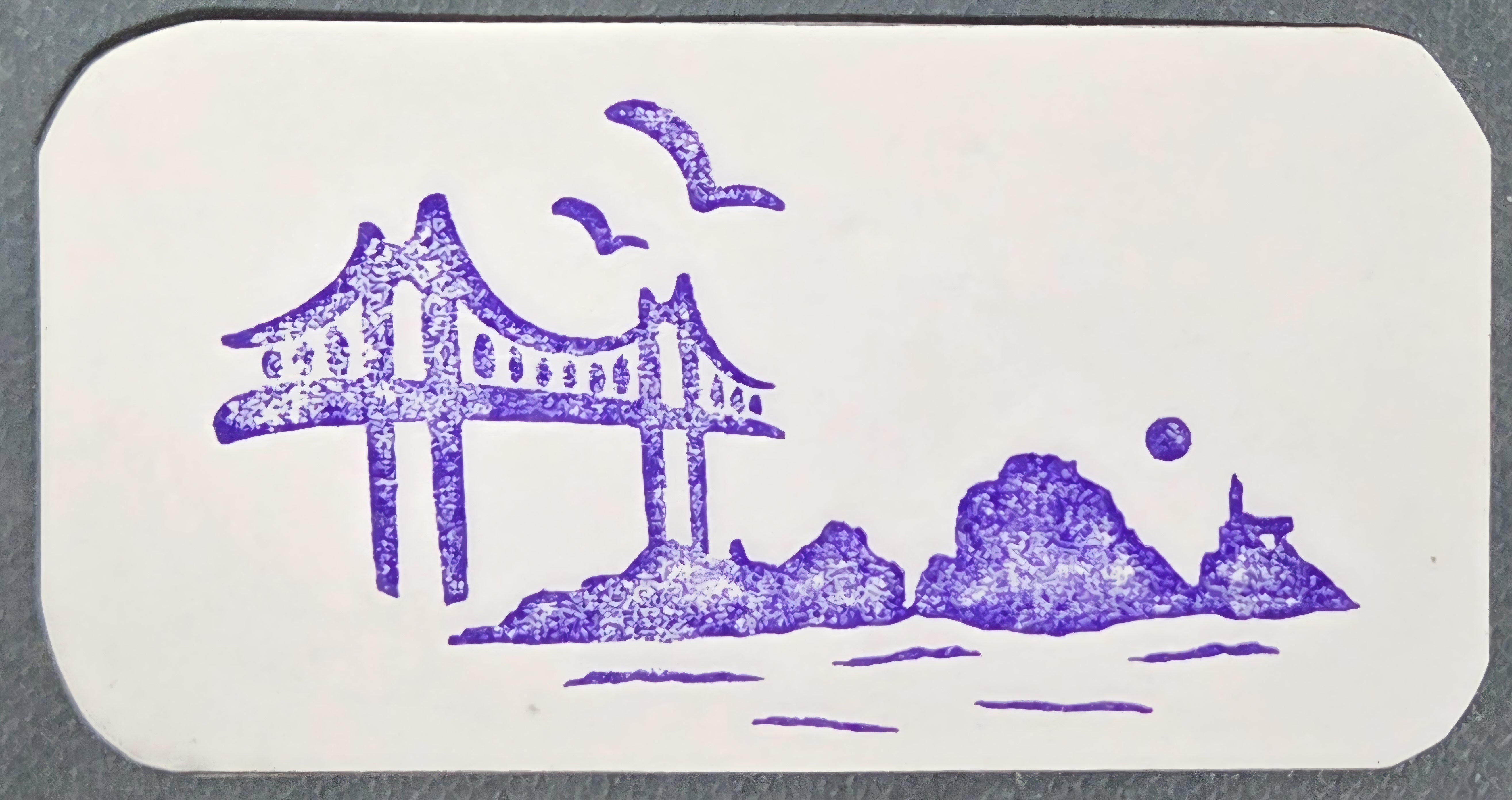

1905년 1월 1일 초량에서 영등포까지 경부선 철도를 개통하면서 동시에 관부연락선의 운항시간도 경부선 시간표에 맞추어 운영했다. 산요철도의 자회사인 산요기선이 운영하던 최초의 관부연락선 잇키마루(壹岐丸)가 취항한 날은 1905년 9월 11일 이었다.
경부선 철도와 화륜선 잇키마루가 우리나라 문학작품에 처음 등장하는 것은 1912년에 발표한 최찬식의 애정 신소설 <추월색>이다. 주인공 정임이가 부모의 강요에 반대하면서 애인을 만나러 동경으로 도주하는 과정이 자세히 묘사되어 있다.
관부연락선의 배 이름도 초기에는 일본 섬 이름인 잇키, 쓰시마로 시작했다가 조선을 완전히 합방한 후에는 고려, 신라, 경복, 덕수, 창경 등을 운행했으며 만주와 중국으로 세력 확장을 하고서는 금강, 곤륜, 천산, 흥안 등으로 바꾸었다.
일본이 레이와(令和)시대를 맞아 2024년 새롭게 발행한 1만원권 지폐의 주인공으로 등장하는 사람이 `일본의 설계자` 시부사와 에이치다. 그는 당시 경부철도주식회사 사장이었으며, 지금의 서울역인 한성 남대문역에서 열린 경부선 개통 축사에서 "철도는 문명개화와 산업발전을 가져올 것" 이라며 장밋빛 전망을 밝혔다. 그러나 시부사와 에이이치 역시 한반도 침탈에 나선 사람이다.
일본이 조선에 와서 가장 먼저 시행했던 식민지 역점사업은 부산에서 신의주까지의 철도건설 이었다. 일제의 철도건설은 침략과 개발의 두 얼굴을 지닌 근대화의 산물이었다. 철도는 1919년 3.1만세운동이 전국적으로 급속히 확산되는 데 크게 기여하기도 했다.
3.1운동 이후부터 조선인의 이동을 감시하기 시작하면서 연락선을 타려면 도항증명서가 필요했다. 도항증은 신분을 확인하는 여권과 같은 것이었다.
이른바 불령선인(不逞鮮人)을 가려내기 위한 제도가 일자리를 찾아 일본으로 밀항하려는 노동자들에게는 큰 걸림돌이었다.
막상 부산까지 와서 도항길이 막혀버린 절박한 노동자들을 노리는 사기꾼들이 부두 주변에 득실거렸다. 1935년 순수문예잡지 <조선문단> 4월호에 발표된 이남원의 소설 <부산>에서 브로커에게 사기당한 주인공이 일본행 대신 만주에 막일꾼으로 끌려가면서 " 부산은 양심 없는 마굴이자 썩어가는 인간지옥이다." 라고 욕설을 퍼붓는다.
실제로 부산의 유지들은 4천여 명에 이르는 도항 대기자들의 문제를 해결하기 위해 모금도 하고 중앙정부에 대책을 강구하기도 했다.
`여객선` 이 아니라 `연락선` 이라고 한 것은 승객이 아니라 전쟁물자 연결수송에 무게를 두었기 때문이다. 증기선 잇키마루호가 부산서 11시간 30분 운항하여 시모노세키에 도착하면 동경까지 철도로 연결되고 부산에서는 경부선과 경의선을 거쳐 만주와 시베리아, 유라시아로 연결된다. 이것으로 일본제국주의의 대동맥이 구축된 것이다. 일제의 대륙침략이 본격화되는 1936년 경부선 복선공사가 시작되어 1944년 10월에 완공되었으며, 부산진에서 출발하는 동해남부선은 1930년 7월에 착공하여 1935년 말에 개통되었다. 동해남부선은 한 세대 전만 해도 젊은이들이 통기타를 치며 해운대, 송정, 기장, 일광 등 해수욕장을 오가던 낭만의 철도였기에 당시의 분위기를 잘 간직한 송정역은 등록문화재 제302호로 지정되어 있다.
동해선의 복선전철 건설로 폐선(廢線)이 된 동해남부선 부지에 해운대 미포에서 청사포를 거쳐 송정까지 왕복하는 친환경 배터리 충전식 해변열차 `해운대 블루라인파크`가 2020년 11월 등장하여 동부산(東釜山) 해안의 수려한 풍경을 즐길 수 있는 새로운 관광명소가 되었다.
관부연락선의 운항 초기에는 연간 4만 명 정도가 연락선을 이용했다. 허나 1938년 국가총동원법이 발동되고 나서는 광부, 부두노동자, 학도병, 보국대, 여자정신대 등 대규모 인력송출 때문에 이용객이 300만 명으로 크게 늘었다. 1940년대는 관부연락선 외에도 부산과 하카다, 제주와 오사카, 여수와 시모노세키 등을 연결하는 새로운 연락선이 개설되었다.
그러나 1943년 10월 5일 밤 부산으로 오던 7,903톤급 곤론마루(崑崙丸)가 미군 해군 잠수함의 어뢰 공격으로 승객 544명이 침몰하는 사고가 난 이후 야간운행이 금지되고 낮에도 수상비행기의 엄호 아래 운항되었다. 2차 대전 말기 연합군의 폭격이 심해지자 1945년 3월부터는 관부연락선의 운항이 사실상 중단되었다.
With the opening of the Gyeongbu Railway between Choryang and Yeongdeungpo on January 1, 1905, the operating schedule of the Gwanbu Connecting Ferry (the ferry linking Busan and Shimonoseki) was coordinated to match the Gyeongbu Line timetable. The first Gwanbu Connecting Ferry, Ikki-maru (壹岐丸), operated by Sanyo Kisen, a subsidiary of the Sanyo Railway Company, entered service on September 11, 1905.
The first appearance of the Gyeongbu Railway and the paddle steamer Ikki-maru in Korean literature is found in Choi Chan-sik’s romance novel Chuwolsaek (Passing Colors), published in 1912. The novel vividly depicts the process by which the heroine, Jeong-im, defies her parents’ coercion and flees to Tokyo to meet her lover.
In the early years, the names of the Gwanbu Connecting Ferries were taken from Japanese island names such as Ikki and Tsushima. After the complete annexation of Korea, the vessels were renamed Goryeo, Silla, Gyeongbok, Deoksu, and Changgyeong. As Japan expanded its influence into Manchuria and China, the ship names were changed again to Geumgang, Kunlun, Tianshan, and Xing’an.
The figure who appears on Japan’s newly issued 10,000-yen banknote in 2024, marking the Reiwa era, is Shibusawa Eiichi, often referred to as “the architect of modern Japan.” At the time, he served as president of the Gyeongbu Railway Company. In his congratulatory address at the opening ceremony of the Gyeongbu Line, held at Hanseong Namdaemun Station (today’s Seoul Station), he proclaimed that “railways will bring enlightenment and industrial development,” offering an optimistic vision of the future. Nevertheless, Shibusawa Eiichi was also among those who actively participated in the invasion of the Korean Peninsula.
The very first major colonial project undertaken by Japan in Korea was the construction of railways from Busan to Sinuiju. Japanese railway construction was a product of modernity with two faces—invasion and development. Railways also played a significant role in the rapid nationwide spread of the March 1st Independence Movement in 1919.
After the March 1st Movement, the colonial authorities began to monitor the movement of Koreans more closely, requiring a travel permit (dohangjeung) to board the connecting ferry. This permit functioned much like a passport for identity verification. The system, designed to identify so-called “unruly Koreans” (buryeong seon-in), became a major obstacle for laborers attempting to stow away to Japan in search of work.
Swindlers flocked around the docks to prey on desperate workers who had managed to reach Busan only to find their passage blocked. In Lee Nam-won’s short story Busan, published in the April 1935 issue of the literary magazine Joseon Mundan, the protagonist—having been cheated by a broker and dragged to Manchuria as a manual laborer instead of going to Japan—lashes out, calling Busan “a den of conscience-less corruption and a decaying human hell.”
In reality, prominent citizens of Busan organized fund-raising efforts and petitioned the central government to address the plight of the roughly 4,000 people waiting for passage.
The service was called a “connecting ferry” rather than a passenger ferry because its primary purpose was the transport and linkage of war supplies, not civilian travel. When the steamship Ikki-maru departed Busan and arrived in Shimonoseki after an 11-hour-and-30-minute voyage, passengers could continue by rail to Tokyo. From Busan, the network extended via the Gyeongbu and Gyeongui Lines to Manchuria, Siberia, and ultimately across Eurasia. This system formed the main artery of Japanese imperialism.
As Japan’s continental invasion intensified, construction of double tracks on the Gyeongbu Line began in 1936 and was completed in October 1944. The Donghae Nambu Line, departing from Busanjin, was launched in July 1930 and opened at the end of 1935. Until just one generation ago, it was remembered as a romantic railway where young people strummed guitars while traveling to beaches such as Haeundae, Songjeong, Gijang, and Ilgwang. Songjeong Station, which preserves the atmosphere of that era, has been designated Registered Cultural Heritage No. 302.
After the Donghae Line was converted into a double-track electrified railway, the former Donghae Nambu Line was abandoned. On this site, an eco-friendly, battery-powered coastal train, Haeundae Blueline Park, running round-trip from Mipo in Haeundae through Cheongsapo to Songjeong, opened in November 2020 and has since become a new tourist attraction showcasing the scenic coastline of eastern Busan.
In the early years, approximately 40,000 passengers per year used the Gwanbu Connecting Ferry. However, after the enactment of the National Mobilization Act in 1938, the number surged to three million, driven by the mass mobilization of miners, dockworkers, student soldiers, patriotic labor corps members, and women conscripted into labor service. During the 1940s, additional connecting ferry routes were opened, linking Busan and Hakata, Jeju and Osaka, and Yeosu and Shimonoseki, alongside the Gwanbu route.
This expansion came to an abrupt halt on the night of October 5, 1943, when the 7,903-ton Konron-maru (崑崙丸), en route to Busan, was struck by a torpedo from a U.S. Navy submarine, sinking with the loss of 544 passengers. After this incident, night operations were banned, and even daytime voyages were conducted under escort by seaplanes. As Allied bombing intensified toward the end of World War II, operations of the Gwanbu Connecting Ferry were effectively suspended from March 1945 onward.

'부산 Busan' 카테고리의 다른 글
| 부산의 외국인 거리들(1) Busan`s foreign districts (1) | 2026.01.06 |
|---|---|
| 경부선 철도와 부산역(2) Gyeongbu Railway Line and Busan Station (1) | 2025.12.29 |
| 부산의 전차 Streetcars in Busan (1) | 2025.12.26 |
| 부산항 이야기(3) "The Story of Busan Port" (2) | 2025.12.11 |
| 부산항 이야기(2)"The Story of Busan Port" (1) | 2025.12.08 |