
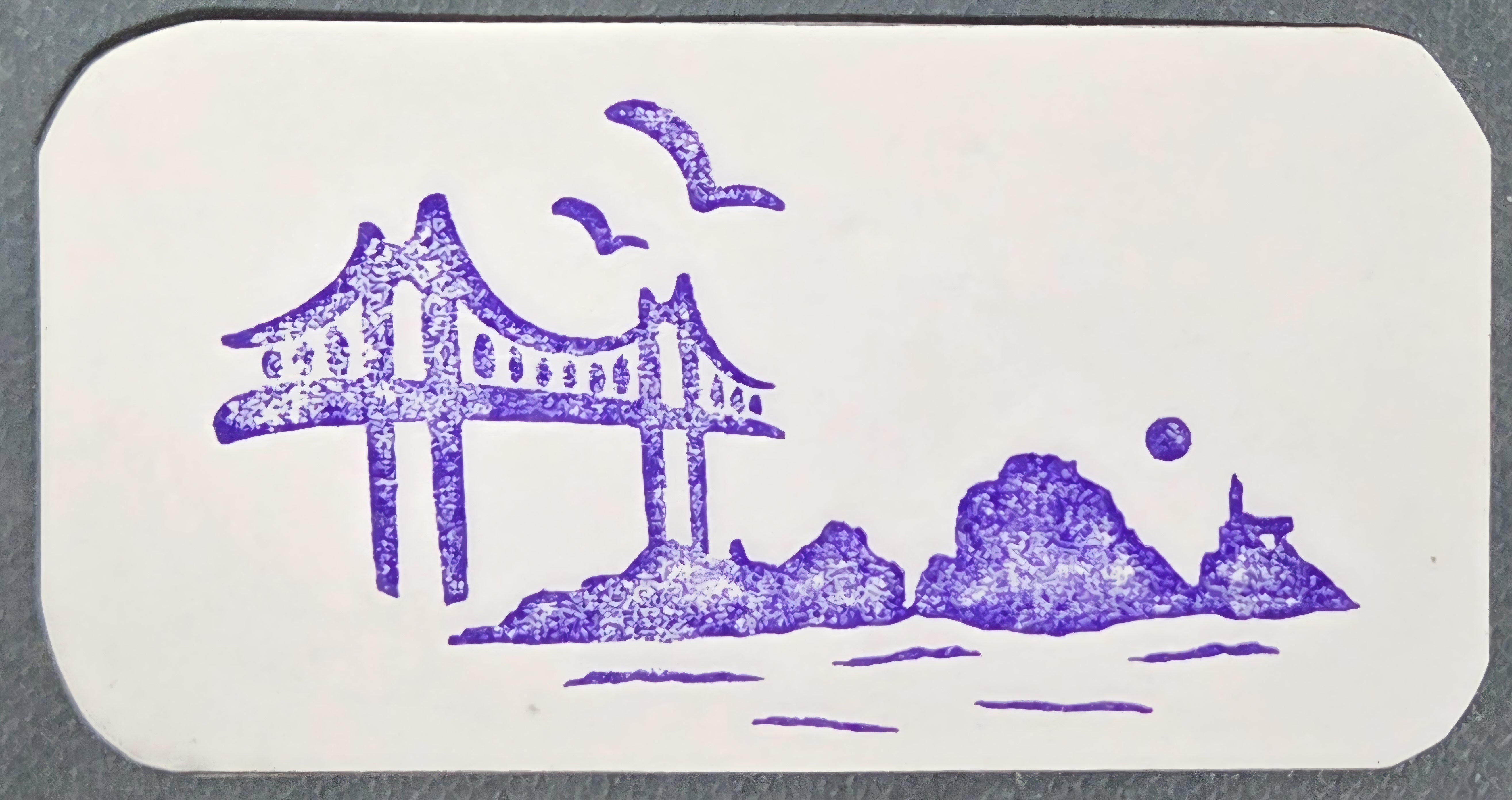

개항기(1876~1901)
1882년 미국과의 수호통상 조약을 체결한 우리나라는 이듬해 1883년 부산해관(지금의 부산세관)을 개청했다. 부산해관은 우리나라에서 가장 오래된 공공기관이다. 1876년 개항 이후 이때 부터 부산항은 본격적인 국제무역항의 모습을 갖추기 시작했다.
부산해관의 제1대 해관장은 영국인 넬슨 로버트(William Nelson Lovatt), 2대 해관장은 프랑스인 피리(Aiexander Theophile Piry), 3대 해관장은 영국인 헌트(Johnathon H. Hunt)였다.
헌트는 1888년 부터 1898년까지 무려 10여 년동안 해관장을 지냈다.
그는 청나라에서 근무하던 시절 이익제라는 사람에게서 조선말을 배웠다. 부임하자 마자 해관 부지 조성사업을 시작했고 우리국토를 마음대로 형질변경하는 일에 비협조적 이었던 조선정부를 설득해 매립허가를 받고 1000냥의 공사비를 받아 1889년 준공했다. 이후 추가 공사비를 받아 보세창고와 부속건물도 지었다. 그는 부산해관장 이라는 직책에 걸맞게 조선의 이익을 대변하기 위해 노력했다.
4대 해관장은 프랑스인 라포트(E. Laport), 5대는 영국인 오스본(W. M. Osborn), 6대는 이탈리아인 페코리니(D. M. Pecorini) 였다. 7대는 일본인 야마오카요시고로(山岡義五郞)였다.
이후 일제강점기 동안 7명의 일본인 해관장이 근무하였다. 한국인 해관장이 처음 취임한 것은 정부 수립 후인 1948년 4월로, 장기빈 부산세관장 이다.
당시 부산해관의 주 업무는 동산 앞의 잔교식 부두에서 이루어졌고 북항 전체는 긴 백사장이 있는 남해안의 여느 해안가와 다르지 않았다.
매축기(1902~1945)
1902년 부터 1945년까지 총 7차례에 걸친 매축공사가 있었다. 1902년에 시작된 첫 번째 매축을 제1차 북빈매립공사라 부른다. 이 공사는 선박의 접안을 효율적으로 하기 위해 디귿 자를 세운 모양으로 가운데가 들어간 형태로 만들어 졌다. 두 번째 공사는 1907년 부터 2년 동안 진행된 제2차 북빈매립공사 이다. 이 두번의 매축공사로 제1부두의 모습이 드러났다.
1910년~1913년 까지 이루어진 세번째 매축공사의 핵심은 영선산 착평공사 였다. 영선산이라는 쌍산을 착평한 후, 절토된 흙을 다시 깔아서 넓은 토지를 확보하는 일 이었다. 해안 쪽으로 돌출된 영선산이 철로 개설과 도로 건설을 막고 있어서 이를 착평하고 넓은 평지를 확보해야만 제1부두와 경부선이 연결되는 기반구축이 가능했던 것이다.
이 공사로 전관거류지와 서면을 연결하는 지금의 중앙로도 개설되었다.
옛 부산역의 가장 큰 특징은 부두와 역이 결합된 통합형 이었다는 점이다. 1905년에 서울 영등포와 부산을 연결하는 경부선이 완성되었다.
부두 안으로 경부선 철로가 들어와서 시모노세키(下關)에서 출항한 관부 연락선(지금의 부관페리호)에서 내린 물자와 사람들이 경성(서울)로 바로 이어지는 것이었다. 일본-->부산-->경성(서울 영등포)-->만주 로 이어지는 인적 물적 흐름이 완성되었고 그 시작점이 제1부두 였던 것이다.
당시 이 배를 타고 떠난 조선인이 60만에 이른다. 1945년 해방 후 25년 뒤인 1970년 운항을 재개한 그해 6월 16일 승객 397명과 자동차 7대가 부산항 제1부두에 내렸다. 첫 입국자는 돌아가신 아베 총리의 외할아버지 기시노부스케 였다.
네 번째 매축기인 1914년 부터 1918년의 핵심 사업은 제2부두 건설과 부산진 일대의 매축 이었다. 1910년대 역사기록 사진에 이미 부산역사와 부산세관 건물이 보인다. 두 건물은 1910년도에 완공된 것으로 부산역 건물은 1953년 11월 27일 화재로 소실 되었고 부산세관 건물은 부산대교를 건설하면서 도로를 확장한다는 이유로 1979년에 해체되고 말았다.
1920~1929년 까지 다섯 번째 매축공사가 진행되었다. 당시 일본은 1919년 3.1운동의 영향으로 민족의식을 개조하기 위한 문화 식민 지배가 본격화 되던 기시 였다. 백산 안희제 선생이나 박재혁 열사사 제1부두를 오갔고, 2.8독립선언에 참여했던 김마리아 열사가 기모노 속에 독립선언서 10장을 감추고 들어와 3.1운동의 불씨가 전국에 전해졌던 곳이 부산항 제1부두였다.
연안항만, 물양장, 창고, 철도 연결망이 확장되면서 부산이 조선 최대의 무역항으로 자리잡기 시작했고 일본 본토와의 물류량 증가로 도시가 급속히 팽창하던 시기이다. 더불어 영도, 초량, 남포동과 광복동 일대에 일본인 상권과 주거지가 대규모로 형성되었다.
여섯 번째 매축기는 영도다리 건설(1931.10~1934.11)을 핵심으로 하는 1936년까지의 시기를 말한다. 이 기간에 남빈(지금의 자갈치시장과 부산공동어시장)일대의 매축공사로 이 일대가 정비되고 건너편 영도 대평동 일대의 매립으로 지금의 수리조선소 부지들이 확보되면서 남항의 모습이 드러난다.
영도 다리의 건설로 영도는 섬이 아닌 육지처럼 사용되었다. 이곳에는 당시 일본인이 경영하던 여러 기업들이 있었고 수산업, 도자기, 토목업, 쌀 반출을 위한 정미소, 수리 조선업 등이 성황을 이루었다.
1939년 부터 해방 직전까지가 일곱 번째 매축기 이다. 당시 태평양 전쟁을 일으킨 일본은 보급과 지원을 위해 서둘러 3, 4 부두와 중앙부두를 건설했다. 이로써 부산항은 총 5개의 부두로 해방을 맞았다. 이후 한국 정부는 해방과 전쟁을 겪는 동안 부두를 새로이 축조할 여력을 갖추지 못했고 1970년대 중반까지 약 30년 동안 5기의 부두에 의존해야 했다.
Port-Opening Period (1876–1901)
After concluding the Treaty of Amity and Commerce with the United States in 1882, Korea opened the Busan Customs House (today’s Busan Customs) in 1883. Busan Customs is the oldest public institution in Korea. From this point onward—after the port opening of 1876—Busan Port began to take on the characteristics of a full-fledged international trading port.
The first commissioner of Busan Customs was the British national William Nelson Lovatt; the second was the Frenchman Alexander Theophile Piry; and the third was the British official Johnathon H. Hunt.
Hunt served as commissioner for more than ten years, from 1888 to 1898. While working in China, he had learned the Korean language from a man named Lee Ik-je. Upon taking office in Busan, he immediately initiated the development project for the customs compound. At a time when the Joseon government was reluctant to allow foreigners to alter the land, he persuaded officials to grant permission for reclamation and secured 1,000 nyang for construction. The work was completed in 1889. He later obtained additional funds to build bonded warehouses and auxiliary facilities. As commissioner, he worked actively to protect the interests of Joseon.
The fourth commissioner was the Frenchman E. Laport; the fifth, the British W. M. Osborn; and the sixth, the Italian D. M. Pecorini. The seventh was the Japanese official Yamaoka Yoshigoro (山岡義五郞).
During the Japanese colonial period, seven Japanese commissioners served in succession. It was only after the establishment of the Korean government that a Korean was appointed: Jang Ki-bin, in April 1948.
At that time, the main operations of Busan Customs were conducted at the jetty-style pier in front of Dongsan, and the entire shoreline of the North Port looked like any ordinary sandy beach along Korea’s southern coast.
Reclamation Period (1902–1945)
From 1902 to 1945, a total of seven major reclamation projects were carried out.
The first project, begun in 1902, is known as the First Bukbin Reclamation Project. It created a recessed, ‘ㄷ’-shaped layout designed to improve the efficiency of ship berthing. The second project, conducted over two years from 1907, is known as the Second Bukbin Reclamation Project. These two projects gave rise to the original form of Pier 1.
The core of the third reclamation project (1910–1913) was the leveling of Yeongseon Mountain, a twin-peaked hill. Because the mountain protruded toward the shoreline, it obstructed both railway and road construction. By cutting it down and spreading the excavated earth to create wide, flat land, the groundwork was finally laid for connecting Pier 1 with the Gyeongbu Railway Line.
This project also enabled the construction of today’s Jungang-ro, linking the Jeonggwan Concession with Seomyeon.
A major feature of the old Busan Station was its integrated structure with the pier. When the Gyeongbu Line—linking Yeongdeungpo and Busan—was completed in 1905, the railway tracks extended directly into the pier. Passengers and cargo arriving from Shimonoseki on the Kanpu Ferry (the predecessor of today’s Busan–Shimonoseki Ferry) could continue immediately to Gyeongseong (Seoul). In this way, the flow of people and goods along the route Japan → Busan → Gyeongseong → Manchuria was completed, with Pier 1 as its starting point.
At the time, the number of Koreans who departed using this route reached 600,000.
After Korea’s liberation, ferry service resumed 25 years later, in 1970. On June 16 of that year, 397 passengers and seven automobiles arrived at Pier 1. The first to disembark was Kishi Nobusuke, the maternal grandfather of the late Prime Minister Abe Shinzo.
The fourth reclamation period (1914–1918) focused on constructing Pier 2 and reclaiming the Busanjin area. Historical photographs from the 1910s already show the buildings of Busan Station and Busan Customs, both completed in 1910. The station building was destroyed by fire on November 27, 1953, and the customs building was dismantled in 1979 due to road-widening work for the construction of Busandaegyo Bridge.
From 1920 to 1929, the fifth reclamation project was carried out.
In the aftermath of the March 1st Movement in 1919, Japan intensified its policy of cultural colonial rule, attempting to reshape the national consciousness of Koreans. Independence activists including Ahn Hee-je of Baeksan and martyr Park Jae-hyuk passed frequently through Pier 1. Kim Maria, who had participated in the February 8 Declaration of Independence, smuggled ten copies of the declaration hidden inside her kimono through Pier 1, helping spread the spark of the March 1st Movement nationwide.
During this time, coastal ports, landing piers, warehouses, and rail connections were expanded. Busan grew into the largest trading port in Korea, and increased cargo traffic with Japan led to rapid urban expansion. Large Japanese commercial and residential districts developed in Yeongdo, Choryang, Nampo-dong, and Gwangbok-dong.
The sixth reclamation period, extending to 1936, centered on the construction of Yeongdo Bridge (October 1931 – November 1934). Reclamation in the Nam-bin area (today’s Jagalchi Market and Busan Cooperative Fish Market) transformed the district, while further reclamation in Dae-pyeong-dong, Yeongdo, created the land where today’s ship-repair yards are located—thus shaping the early form of the South Port.
With the completion of Yeongdo Bridge, Yeongdo Island came to function almost as part of the mainland. The area hosted numerous Japanese-operated businesses and thrived in fishing, ceramics, civil engineering, rice mills for export, and ship-repair industries.
The seventh reclamation period lasted from 1939 until Korea’s liberation in 1945. As Japan waged the Pacific War, it hurriedly constructed Piers 3 and 4 and the Central Pier to secure military supply and support routes. By liberation, Busan Port had a total of five piers.
After liberation and through the Korean War, the Korean government lacked the resources to build new piers, and for roughly 30 years—until the mid-1970s—Busan continued to rely solely on these five piers.

'부산 Busan' 카테고리의 다른 글
| 부산의 전차 Streetcars in Busan (1) | 2025.12.26 |
|---|---|
| 부산항 이야기(3) "The Story of Busan Port" (2) | 2025.12.11 |
| 부산항 이야기(1) "The Story of Busan Port" (1) | 2025.12.05 |
| 금정산 막걸리, 우리나라 최초의 양조장 "Geumjeongsan Makgeolli, Koreas's First Brewery" (1) | 2025.12.03 |
| 부산야구 (3) "Baseball in Busan" (1) | 2025.12.01 |