
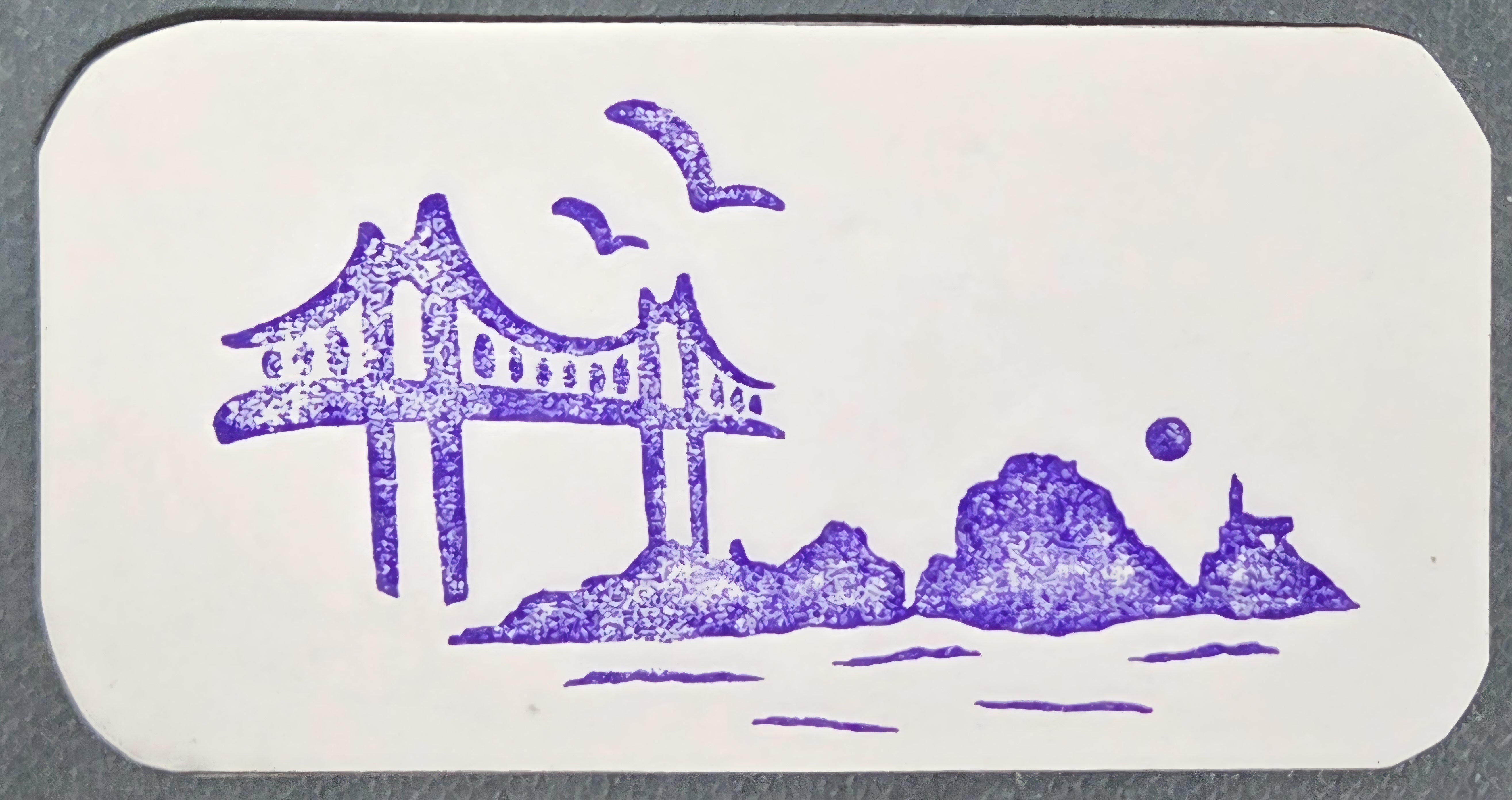

롯데백화점 광복점 자리는 100여년전 동산(東山)이 있던 자리이다. 용두산이 송현산이라 불리던 즈음 용미산 이라 불리기도 했던 자리이다. 일제 시대에는 백화점이 있었고 이후 부산부청자리로 쓰였다. 영도다리를 중심으로 북쪽 바다를 북항, 남쪽 바다를 남항이라 부른다.
북항은 연안여객부두, 제1부두, 제2부두, 중앙부두, 제3부두, 제4부두, 자성대부두(제5, 제6부두결합), 우암부두, 감만부두, 신선대부두로 이루어져 있다.
우리나라 수출입을 70여년 책임져 온 북항은 재개발이 진행 중이다. 자갈치시장과 부산공동어시장으로 대변되는 남항은 수산업의 보고로 기능해 왔다. 자갈치 수산시장 건너편에는 수리조선소들이 있다. 다나카조선소가 설립된것이 1887년, 이후 130년 이상을 선박의 수리와 건조에 전문화된 지역이 남항 이기도 하다.
1883년 부산해관이 개청되고 용미산(지금의 광복롯데자리) 앞 해안을 따라 잔교식 부두가 조성되었다. 잔교식 부두만으로는 개항장의 업무를 수행하기 어려워 1902년 부터 매립을 통한 항구 구축 공사가 본격화 되었다. 1902~1905년에 이루어진 `제1차 북빈매립공사` 를 시작으로 부산항은 7차례에 걸친 매축기, 발전기, 활성기, 재개발기 등의 시기를 거쳐 지금은 재개발 기에 있다. 2026년은 부산항이 개항한지 150년이 되는 해다.
1차 개항기(1407~1876)
부산에는 3곳의 왜관이 있었다.
1.절영도왜관(1601~1607 영도구 대평동)
2.두모포왜관(1607~1678 동구 수정시장)
3.초량왜관 (1678~1876 중구 용두산 일대)
두모포 왜관은 좁고 습해서 500~1000명 가량의 일본인 살기 어렵다고 불평했다. 이에 초량 왜관으로 이전한다. 지금의 지명 '고관' 은 예전 두모포 왜관이 있던 자리 '구관' 을 말한다. 초량왜관(신관)1675(숙종1년) 3월 착공 했다.
대마도에서 사지모쿠자에몽이 기술자 150명 데리고 왔다. 3년만에 완성1678(숙종4년) 4월에 완공했다. 주변 민가는 지금의 상해문 부근에 설문 세우고 설문밖 부산역 건너편으로 이전 시킨다. 건축 자재는 조선에서 제공했다. 집집마다 목욕탕 건설하는 모습에 씻기 싫어하던 조선 사람들이 놀랐다 한다.
처음으로 미닫이문이 들어 왔는데 당시로는 하이테크닉 기술을 일본에서 가져온 셈이다. 이때 부터도 반도체 부품 문제가 있었는지도 모르겠다. 문재인 정부시절 일본이 반도체 기술이 어쩌고 하면서 문제를 삼은 때가 생각나서 해보는 말이다.
기와는 조선 것을 썼다 한다.
용두산 뒷 편에 있는 지금의 기상관측소가 있는 산은 복병산 이라 부르는데, 당시 왜관 주변을 둘러싸고 통행을 금지 하는 표시를 붙이고 6곳에 복병을 배치 해서 그리 불린다 한다.
일설에는 용두산이 고작 해발50미터 이지만 호랑이가 출몰하곤 했다 한다.
복병산 줄기를 타고 왔다는데, 당시 일본인들이 혼줄이 났다는 이야기가 있다.
용두산을 기준으로 동관과 서관으로 나누고 용두산 아래 '신당' 이라는 신사가 있었다. 신사 동관에 '동향사' 라는 절 있었고 그 안에 '부산요' 라는 한일 합작 도자기 공장이 있었다.
대마도 도주가 주로 주문을 했는데 본토의 막부에 보내기 위해서 였다 한다.
일본에서 조선의 매(hawk)의 수요가 많아 매를 길러서 일본에 보내는 관청 '응방' 이 거기 있었다...
이 시기의 교류는 왜의 침략을 근본적으로 막고, 제어하기 위한 조선정부의 노력이라 할 수 있다. 당시 양국을 오고갔던 조선통신사의 횟수는 12차례에 이른다.
외교적 차원에서 국가의 주체성을 확립하고, 일본과의 교류로 부산항(부산포)가 공식 무역항으로 나가는 기점이 되었다는 데 의의가 있다.
The site of today’s Lotte Department Store Gwangbok Branch was once the location of Dongsan about a hundred years ago. When Yongdusan was known as Songhyeon Mountain, the area was also called Yongmi Mountain. During the Japanese colonial period, a department store stood there, and after liberation it became the site of the Busan City Hall. With Yeongdo Bridge as the central point, the sea to the north is called Bukhang (North Port) and the sea to the south is called Namhang (South Port).
Bukhang consists of Yeonan Passenger Terminal, the 1st Pier, 2nd Pier, Jungang Pier, 3rd Pier, 4th Pier, Jaseongdae Pier (a combination of Piers 5 and 6), U-am Pier, Gamman Pier, and Sinseondae Pier. For more than 70 years, Bukhang has served as the gateway for Korea’s imports and exports, and it is now undergoing redevelopment. Namhang, represented by Jagalchi Market and the Busan Cooperative Fish Market, has long functioned as a center of the fishing industry. Across from Jagalchi Fish Market stand several ship repair docks. Tanaka Shipyard was established in 1887, and for more than 130 years this area has specialized in ship repair and construction—another identity of Namhang.
In 1883, the Busan Customs Office opened, and a pier using the pile-supported “janggyo-style” structure was built along the coastline in front of Yongmi Mountain (the current Lotte Gwangbok site). Because such piers alone could not support the full functions of an open port, large-scale reclamation to build a modern harbor began in earnest in 1902. Starting with the First North Port Reclamation Project (1902–1905), Busan Port went through seven stages—reclamation, development, expansion, revitalization, and redevelopment—and it is now in the redevelopment stage. The year 2026 marks the 150th anniversary of the opening of Busan Port.
---
1st Opening Period (1407–1876)
Busan had three Waegwan (Japanese trading compounds):
1. Jeolyeongdo Waegwan (1601–1607, Daepyeong-dong, Yeongdo-gu)
2. Dumopo Waegwan (1607–1678, near today’s Sujeong Market, Dong-gu)
3. Choryang Waegwan (1678–1876, around Yongdusan in Jung-gu)
The Dumopo Waegwan was narrow and damp, and the roughly 500–1,000 Japanese residents complained that life there was difficult. As a result, the compound was relocated to Choryang. The modern place name “Gogwan” refers to this “Old Waegwan” site. Construction of the new Choryang Waegwan (the “New Compound”) began in March 1675 (1st year of King Sukjong). From Tsushima, Saji Mokuzaemon brought 150 skilled workers. The compound was completed in April 1678 (4th year of Sukjong) after only three years.
Nearby Korean households were relocated to the area near today’s Sanghae Gate and beyond the present Busan Station. All building materials were provided by Joseon. Koreans were astonished at the sight of Japanese-style baths being built in every house, as bathing was not yet a common habit among many Joseon people.
Sliding doors (misdarimun) were introduced for the first time—considered high-tech at the time—brought from Japan. One might even say that semiconductor component disputes may have begun as early as then, recalling the tensions during the Moon Jae-in administration when Japan raised issues about semiconductor materials. Roof tiles, however, were made with Joseon materials.
The hill behind Yongdusan, where today’s weather observatory stands, was called Bokbyeongsan. It was named so because six sentries (bokbyeong) were posted around the Waegwan with signs prohibiting passage. Another account says that although Yongdusan is only about 50 meters high, tigers once appeared there. They were said to have descended along the Bokbyeongsan ridge, terrifying the Japanese residents.
Using Yongdusan as the center, the compound was divided into East and West Sections. Beneath Yongdusan stood a Shinto shrine called Sindang. In the eastern section of the shrine was a temple named Donghyangsa, and within it was Busan Kiln—a joint Joseon–Japanese porcelain workshop. Most of its orders came from the Tsushima lord, who used the ceramics as tribute to the shogunate in Japan.
Japan also had a great demand for Korean falcons, so a government office called Eungbang was located there to raise hawks and send them to Japan.
The exchanges of this period can be seen as Joseon’s efforts to fundamentally restrain and control Japanese aggression. During this era, the Joseon Tongsinsa diplomatic missions traveled to Japan twelve times. These missions affirmed Joseon’s sovereignty at a diplomatic level and established Busan Port (Busanpo) as an official international trading port, marking the beginning of its role in foreign commerce.

These old photographs can be found in the library...Gupo library..how grateful i am ...
'부산 Busan' 카테고리의 다른 글
| 부산항 이야기(3) "The Story of Busan Port" (2) | 2025.12.11 |
|---|---|
| 부산항 이야기(2)"The Story of Busan Port" (1) | 2025.12.08 |
| 금정산 막걸리, 우리나라 최초의 양조장 "Geumjeongsan Makgeolli, Koreas's First Brewery" (1) | 2025.12.03 |
| 부산야구 (3) "Baseball in Busan" (1) | 2025.12.01 |
| 부산야구 (1) "Baseball in Busan" (0) | 2025.11.26 |