
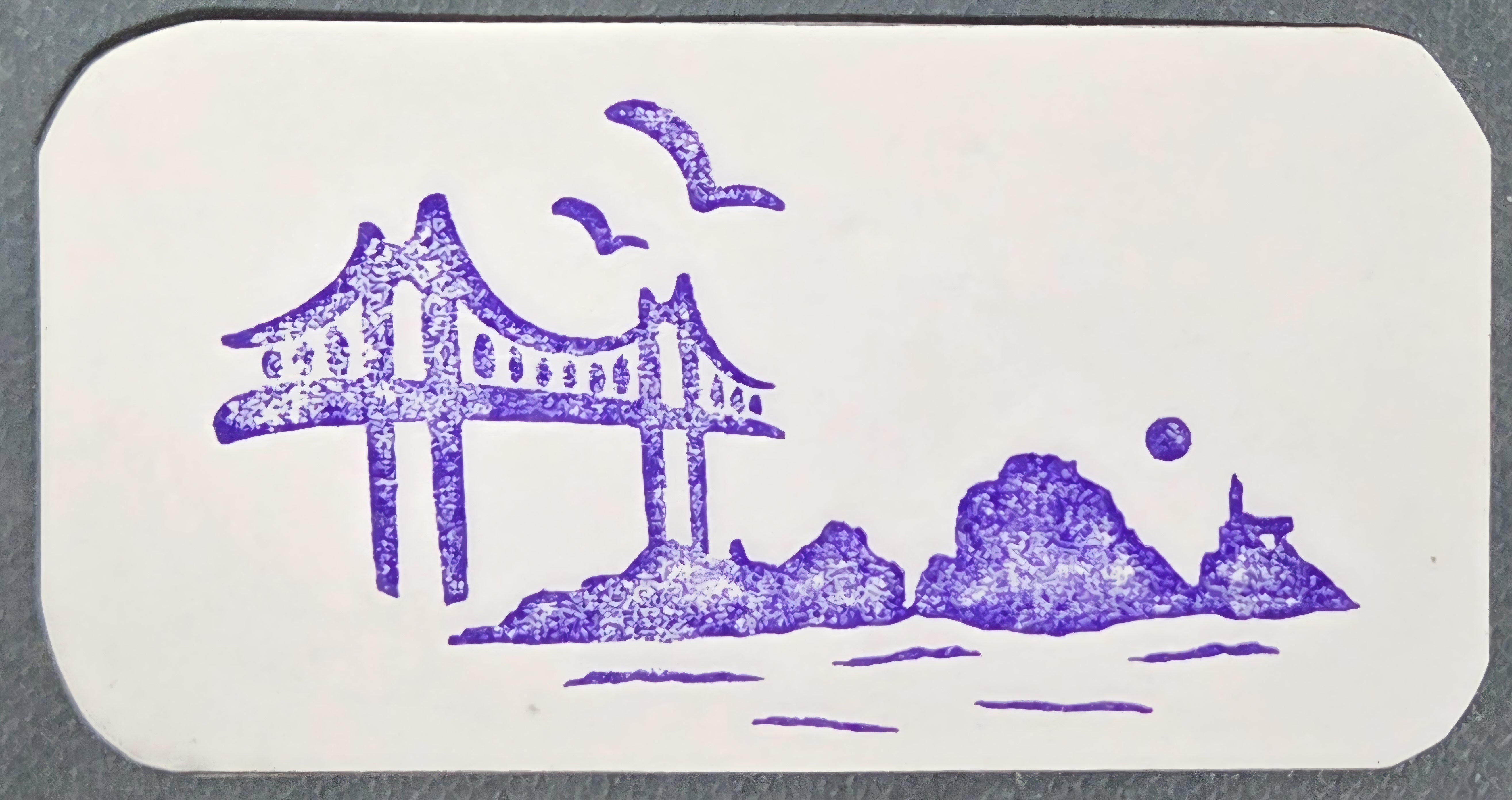

기록상 서양인이 부산항에 첫 발을 내디딘 것은 1797년 10.15 일 영국 해군 탐사선 프로비던스호의 부속선 프린스 윌리엄 헨리호의 승무원 이었을 것이다. 약 80년 후 부산이 개항 했다. 1883년 6월 영국인 넬슨로바트가 뮐렌도르프의 전보를 받고 초대 부산 해관장으로 부임했고 로버트 해관장 가족은 부산에 거주한 최초으 서양인 가정 이었다. 의료선교사 앨런 1884년 9월 17일 도착, 1885년 아펜젤러, 언더우드 선교사도 서울을 가기 위해 부산항에 도착 했다. 당시 조선의 대부분 기선항로는 일본 나가사키에서 부산항을 거쳐 인천으로 오갔다. 부산항은 조선의 관문, 인천항은 서울의 관문 이라는 말이 생겼다.
산야는 헐벗었고 멀리 언덕 곳곳에 움직이는 하얀 점들은 흰옷을 입은 조선인 들이었다.
1883년 11월 ~1885년 6월 조선을 여행했던 영국 외교관 칼스는 그의 책 [코리아에서의 생활]에 부산은 순전히 일본인의 도시가 됐고 그 곳에 거주하는 조선인은 없었다. "조선의 집은 초라하고 일본인의 집은 매력적 이다" 라고 했다.
1894년 영국의 지리학자 이사벨라 비숍은 15시간에 걸쳐 나가사키에서 대마도를 거쳐서 부산항에 입항했다. 그녀의 첫 인상은 " 조선이 아니라 일본" 이었다. 당시 부산의 일본인은 5508명, 8000명의 일본 어부가 오고 가는 왜색 도시였다.
1888년 ~ 1889년 최초로 한반도를 횡단한 프랑스 여행지리학자 샤를루이 바라 는 그의 책에서 부산을 네곳으로 구분했다.
1. 용두산 중심의 `일본인 전관 거류지`
2. 정통 양반 문화마을 `동래`
3. 해관직원과 선교사들이 근무하던 `복병산, 영선산 부근의 유럽인 거주지`
4. 토착인의 해변마을 자성대 주변 `부산포`
Fusan->Pusan->Busan
부산의 개항초기 영자 이름은 Fusan 이었다. 일본인은 ㅂ, ㅍ 발음이 힘들어 일본어 헵번식 표기법 ふ-->Fu 로 표기했고 일제 강점기까지 이어진다.
Pusan은 일제 강점기인 1937년에 생긴 "매큔 라이샤워" MR 표기법에 의한 것이다. 태평양 전쟁은 Fusan 과 Pusan 의 대결 이었다. 해방후 Fusan이 사라진 곳에 Pusan이 자리 잡는다. 미 군사 지도에도 Pusan, 6.25 피난수도 표기에도 Pusan으로 세계에 알려 졌다. 1700년대 쓰여진 하멜표류기에 부산은 Pousan 이라 표기 되어 있다. 부산을 로마자로 표기한 최초의 기록 일지 모른다.
1960~2000년 까지 Pusan 과 Busan 이 혼용되어 쓰였다. 2000년 부터 인터넷 시대에 맞추어 정부가 공식 인정한 명칭이 Busan, 현재의 명칭이 된다.
"Japanese style Fusan, American style Pusan, Korean style Busan".
According to records, the first Westerners to set foot in Busan Port were crew members of the auxiliary ship Prince William Henry, belonging to the British naval exploration vessel Providence, on October 15, 1797. About 80 years later, Busan was opened as a treaty port. In June 1883, British national Nelson Lovatt was appointed as the first Commissioner of Customs in Busan upon receiving a telegram from Paul Georg von Möllendorff. The Lovatt family thus became the first Western household to reside in Busan. Medical missionary Horace Allen arrived on September 17, 1884, followed by missionaries Henry Appenzeller and Horace Underwood in 1885, who also entered through Busan Port en route to Seoul.
At that time, most steamship routes in Joseon connected Nagasaki to Busan Port, then continued on to Incheon. Hence the saying arose: “Busan is the gateway to Joseon, while Incheon is the gateway to Seoul.”
The hills were barren, and from afar, small white specks of movement could be seen—Koreans in their white traditional clothing.
Between November 1883 and June 1885, British diplomat Charles William Campbell traveled in Joseon. In his book Life in Korea, he wrote that Busan had become purely a Japanese town and that no Koreans resided there. He remarked, “Korean houses are shabby, whereas Japanese houses are attractive.”
In 1894, the British geographer Isabella Bird Bishop entered Busan Port after a 15-hour journey from Nagasaki via Tsushima. Her first impression was, “This is not Korea, but Japan.” At the time, there were 5,508 Japanese residents in Busan, and around 8,000 Japanese fishermen came and went, making it a distinctly Japanese-style city.
Between 1888 and 1889, French travel-geographer Charles-Louis Varat, the first to traverse the Korean Peninsula, classified Busan into four distinct areas in his writings:
1. The Japanese Concession Settlement centered on Yongdusan
2. Dongnae, a village of traditional yangban culture
3. The European quarter around Bokbyeongsan and Yeongseonsan, where customs officials and missionaries lived
4. The native fishing village near Jaseongdae, known as Busanpo
From Fusan → Pusan → Busan
In the early days of Busan’s opening as a port, its English name was Fusan. Since the Japanese found it difficult to pronounce the Korean consonants “ㅂ” (b/p), they adopted the Hepburn romanization system, rendering it as “Fu” (ふ). This form persisted through the Japanese colonial period.
Pusan emerged during the colonial era in 1937, based on the McCune–Reischauer (MR) system of romanization. In a sense, the Pacific War was a contest between Fusan and Pusan. After Korea’s liberation, Pusan replaced Fusan. It appeared on U.S. military maps and was widely known internationally as the wartime capital during the Korean War.
Interestingly, in Hendrik Hamel’s 17th-century Journal of the Unfortunate Voyage and Shipwreck of the Dutch in Korea, Busan was recorded as Pousan, which may be the earliest Romanized rendering of the city’s name.
From the 1960s to 2000, Pusan and Busan were used interchangeably. In 2000, with the advent of the internet era, the Korean government officially adopted Busan as the city’s standardized name, which remains in use today.
Thus: “Japanese style Fusan, American style Pusan, Korean style Busan.”

'부산 Busan' 카테고리의 다른 글
| 부산항 로맨스, 해관원 사냥개 실종사건 Romance at Busan Port & The Customs Officer's Missing Hunting Dogs (0) | 2025.10.17 |
|---|---|
| 부산항 풍속도 Wae-gwan Was a Village of Men (0) | 2025.10.10 |
| Busan Yongdusan Park Tower lighthouse 용두산 부산타워 등대 (2) | 2025.03.09 |
| Busan story 부산 이야기 (0) | 2025.03.07 |
| 박태준기념관 (2) | 2024.12.16 |